Why it deserves a visit
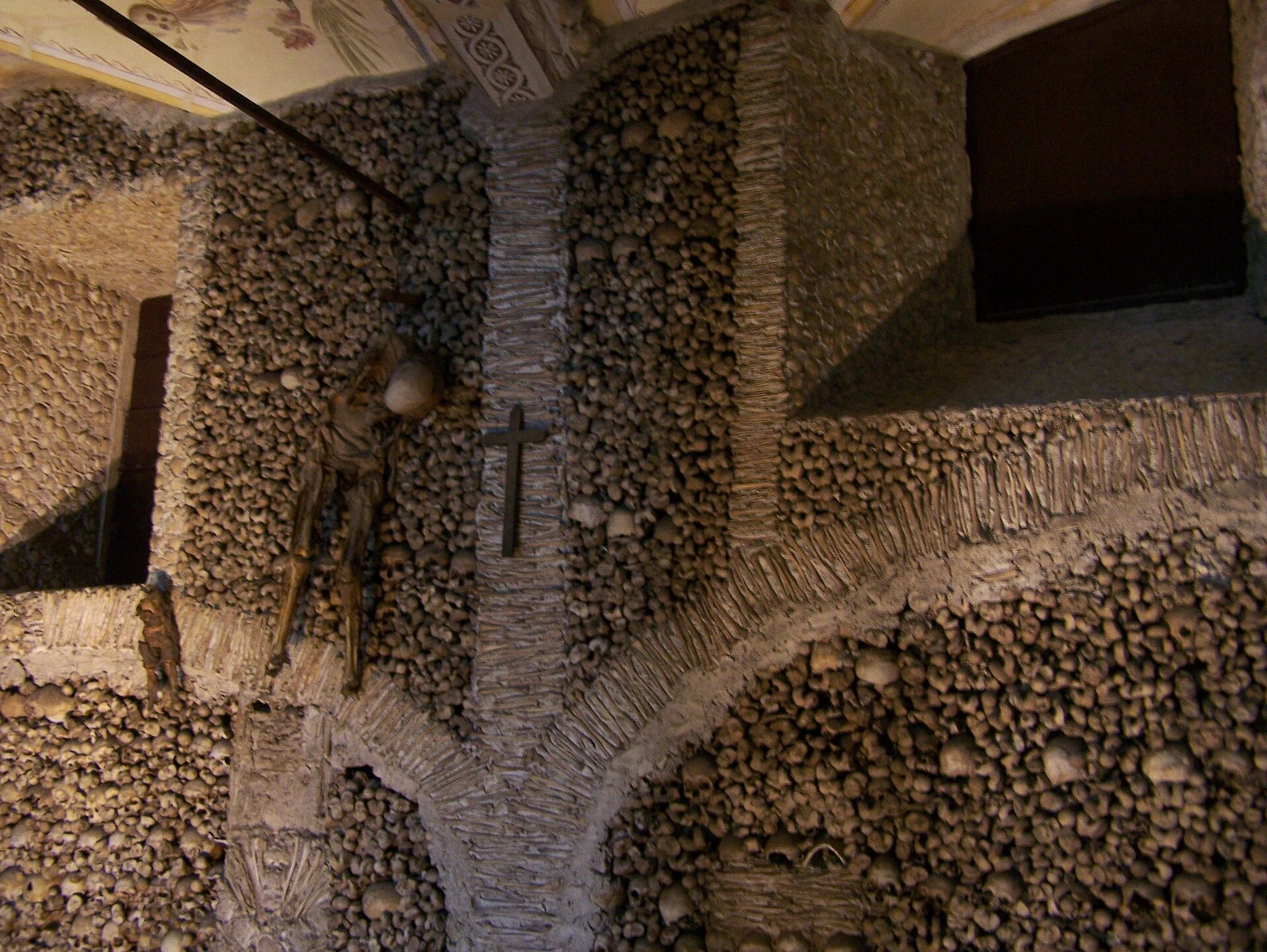
Created by Franciscans in the seventeenth century, the chapel uses human remains in an architectural meditation on life’s brevity and forms part of Évora’s Church of São Francisco.
What to look for
Walls and pillars covered with human remains were arranged by Franciscans in the seventeenth century as a meditation on life’s transience. Read the entrance inscription and symbolism within the religious context of São Francisco Church.
Plan your visit
The chapel belongs to a wider visitor circuit and should not be treated as an isolated macabre attraction. Behave respectfully and check photography rules, worship times and the other areas included. The bones probably came from monastic and parish burial grounds reorganised when the Franciscans sought to make the memory of death physically present.
The chapel forms part of São Francisco Church and uses human remains within a devotional reflection on mortality. Visit respectfully, avoid sensational treatment and confirm the combined circuit, worship schedule and any photography restrictions.