Why it deserves a visit
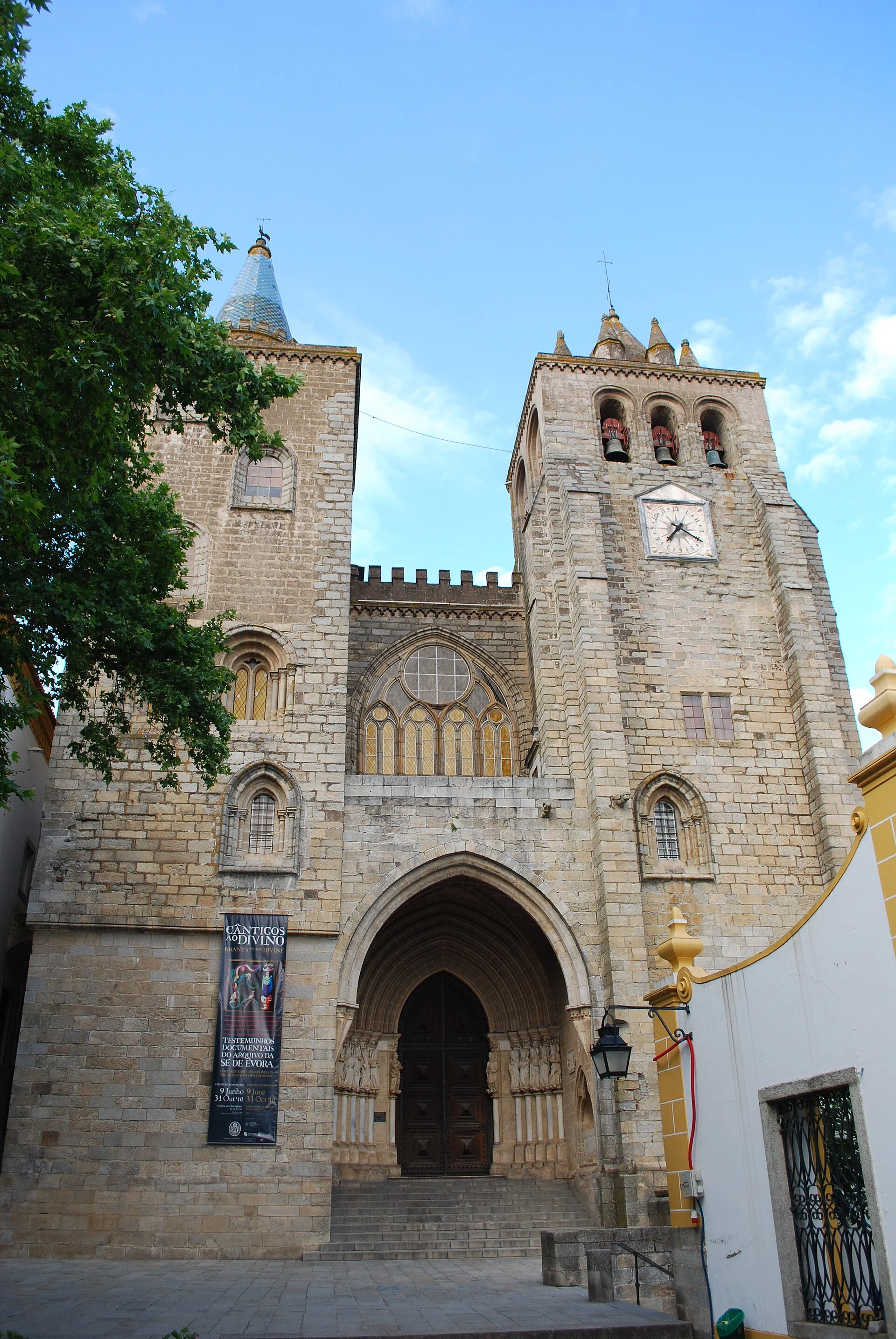
Begun in the late twelfth century, Évora Cathedral combines Romanesque and Gothic architecture with later additions, a medieval cloister and terraces overlooking the historic city and Alentejo plain.
What to look for
Construction began in the late twelfth century, combining Romanesque mass with Gothic development. Compare the asymmetrical towers, Portal of the Apostles, cloister and Baroque chancel to recognise distinct building campaigns.
Plan your visit
Cloister, museum and rooftop may depend on the ticket available. Stone stairs and exposed areas require care in heat or wind; also check worship times before planning the climb. The upper choir preserves Renaissance stalls, while the lantern tower above the crossing creates an unusual silhouette among Portugal’s medieval cathedrals.
The cathedral combines Romanesque, Gothic and later elements, with cloister, museum and rooftop access subject to the current ticket. Stone stairs and exposed terraces require care, especially during heat or strong wind.
Its lantern tower above the crossing is one of the cathedral’s clearest landmarks in Évora’s skyline.