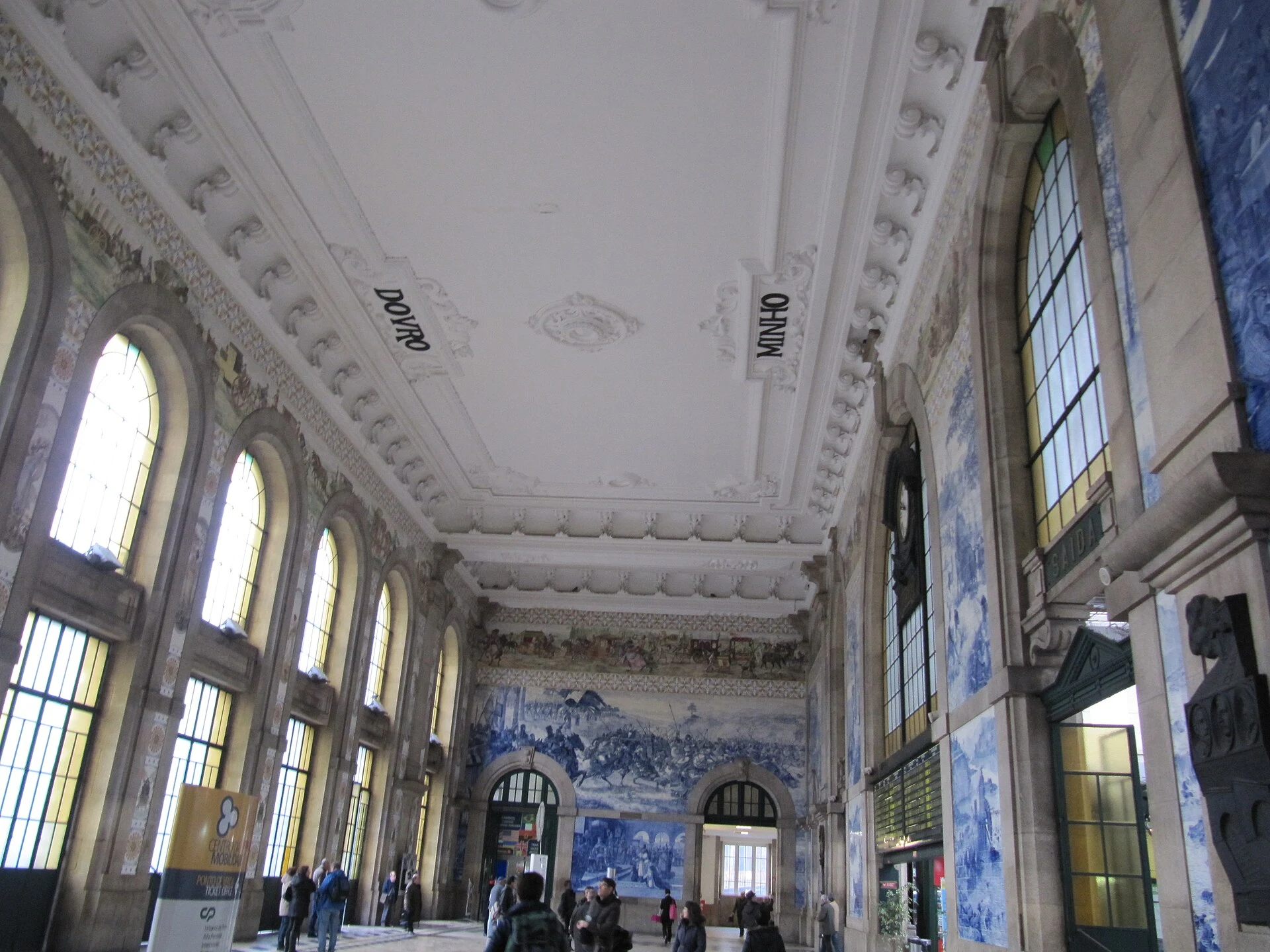
Why it deserves a visit
Opened in the early twentieth century on the site of São Bento de Avé-Maria convent, the station is renowned for Jorge Colaço’s tiled scenes of Portuguese history and regional life.
What to look for
Jorge Colaço’s panels depict episodes including the Tournament of Arcos de Valdevez and King João I’s entry into Porto, alongside scenes of work and traditional transport. The station occupies the site of the former São Bento de Avé-Maria convent. José Marques da Silva designed the Beaux-Arts building, inaugurated in 1916.
Plan your visit
São Bento remains a working station. View the tiles without blocking ticket desks, entrances or passengers, and obtain train times from the operator, treating the heritage visit separately from the journey.
São Bento remains a working railway station, not only a tile hall. Observe Jorge Colaço’s panels without obstructing passengers, platforms or entrances, and check train information separately through the operator rather than relying on the monument visit.
The entrance hall contains roughly twenty thousand azulejos installed during the station’s early twentieth-century construction.